Negotiation, worn photos, automatic replies, listing generation… AI has taken a huge place on Vinted in 18 months. I've been selling on Vinted for 7 years, and we built Bleam on the analysis of 1.5 million conversations. Here's the honest guide to everything AI can (and can't) do for you in 2026.
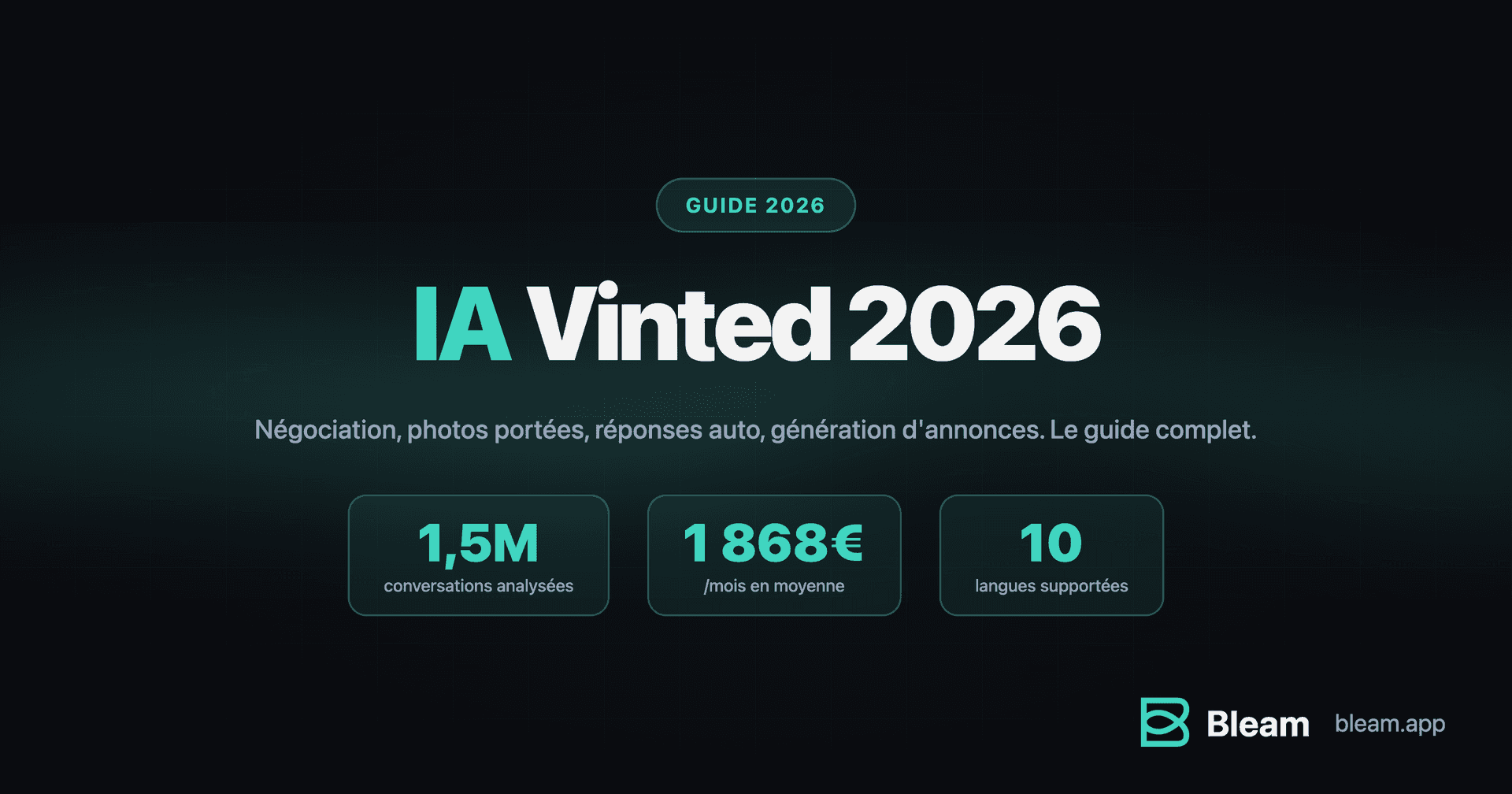
I've been selling on Vinted for 7 years with my company. I've seen the ecosystem go from "a few extensions that repost listings" to "dozens of tools running your business with AI". Honestly, in the current noise, it's become hard to know what actually works and what's just marketing.
This guide is everything I've learned by building Bleam — a tool whose Intelligent Assistant is trained on 1.5 million real Vinted conversations. I'll explain what AI actually does on Vinted today, what it does well, what it does badly, and especially how to choose the right tool for your case. No bullshit.
In 2024, AI on Vinted was still a gimmick. In 2026, it's become essential for serious resellers. A dozen tools now offer AI functions: buyer replies, negotiation, worn photos, listing optimization.
The paradox is that everyone says they're doing "AI", but behind the marketing, the differences are huge. Some AI is just automatic rules dressed up as AI. Others use generic ChatGPT. Only a few tools have really invested in models trained specifically for Vinted.
Before going deep, here are the 7 things AI actually knows how to do on Vinted today. We dive into the main ones in the following sections.
AI analyzes buyer offers, calculates based on your margins, and negotiates in multiple steps to close the sale at the best possible price.
AI answers frequent questions (size, material, authenticity, shipping times) taking into account your seller info and the item description.
AI generates realistic worn photos from your item pictures, automatically sent when a buyer requests one.
Buyers who didn't reply to your message 24 hours later are automatically followed up with a customizable message.
When you repost a listing, AI slightly modifies the title and description to avoid duplicate detection by Vinted.
AI adapts your favorite messages based on buyer's first name, time of day, day of week, item price — to stand out from the same template everyone sends.
This is probably the most impactful use case. An active Vinted seller easily receives 30 to 100 messages per day: "still available?", "what size is it?", "when do you ship?", "is it authentic?", "do you take worn photos?". Replying to all that in under 5 minutes — knowing that 80% of sales close in that window — is humanly impossible.
A good Vinted AI assistant knows how to detect the type of question asked, understand the context (which item, what price, what condition), and reply like you would. At Bleam, the Intelligent Assistant detects as many intents as possible (price request, measurements, worn photos, authenticity questions, condition, shipping, availability, negotiation, etc.) and adapts its response accordingly.
It's available in 10 languages (French, English, German, Spanish, Italian, Portuguese, Dutch, Polish, Swedish, Danish) for those selling across multiple European markets. And crucially, it was trained on 1.5 million real conversations — not on a generic dataset — which changes everything about response quality.
The Bleam Intelligent Assistant is available from our higher plans, with a free commitment-free trial to test.
Most Vinted buyers try to negotiate — it's become a reflex. And that's exactly where it plays out: accept too fast, you leave money on the table. Refuse too fast, the buyer goes elsewhere. A good negotiation AI knows how to pace it. It doesn't give in right away — it starts with a small counter-offer, then a slightly lower one if the buyer pushes, and only then reaches your floor price.
A simple example: you're selling an item for €50, and you're ready to go as low as €40. The AI won't offer €40 upfront. It will start around €45, then €42, and only as a last resort €40. The result: in many cases, the buyer accepts before reaching the floor price — and you keep a few euros you would have lost by accepting too fast.
AI also handles bundles: if a buyer wants multiple items, it applies a margin bonus (+20% for 2 items, +30% for 3, +40% for 4-5, +50% for 6+). That's what protects your overall margin while being generous on larger baskets.
On average, users who activate Bleam's Intelligent Assistant generate 1,868 euros per month thanks to sales closed by the assistant. These are sales that, without it, would simply have been lost — because you were sleeping, working, or the buyer found someone else before you replied.
Want to try the Bleam Intelligent Assistant? The trial is free, with no commitment, cancel in one click anytime.
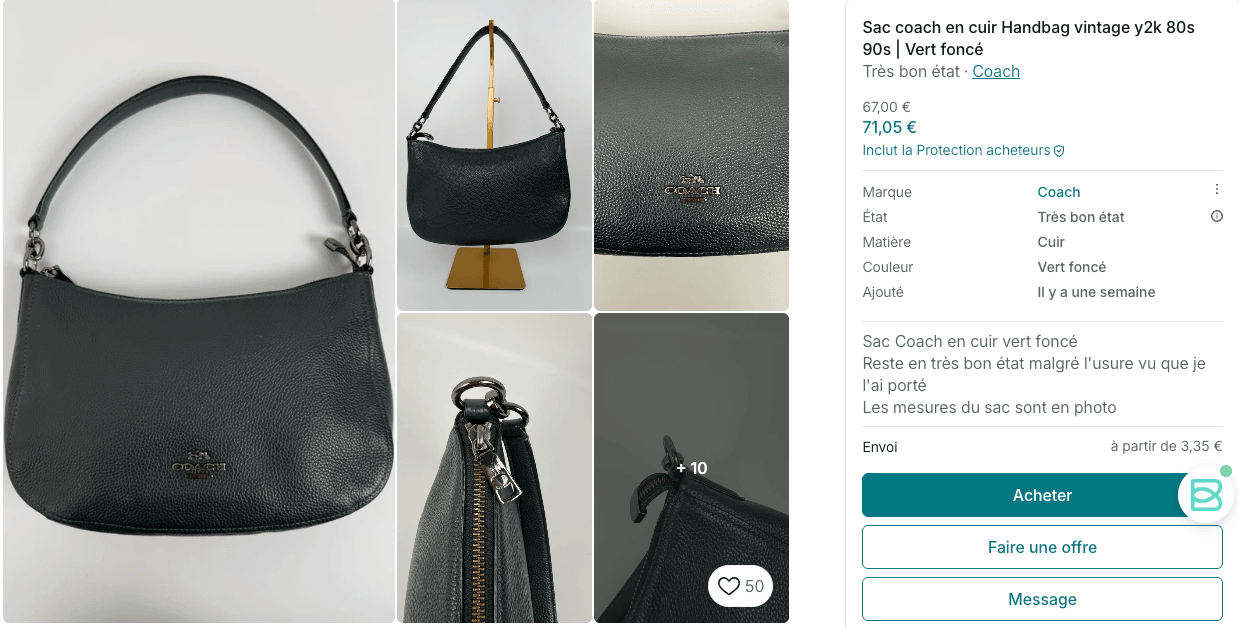
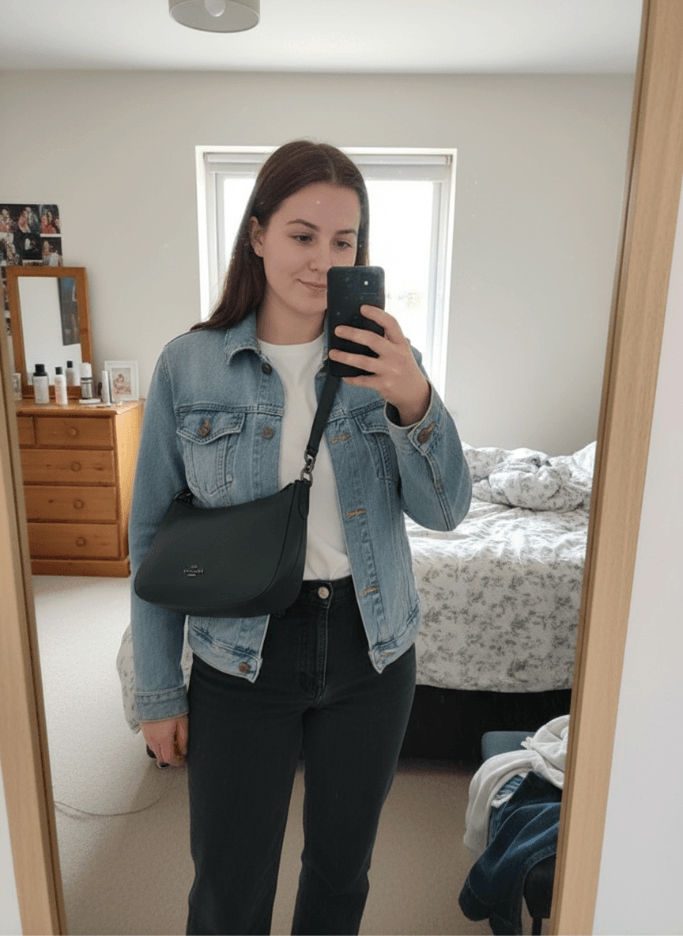
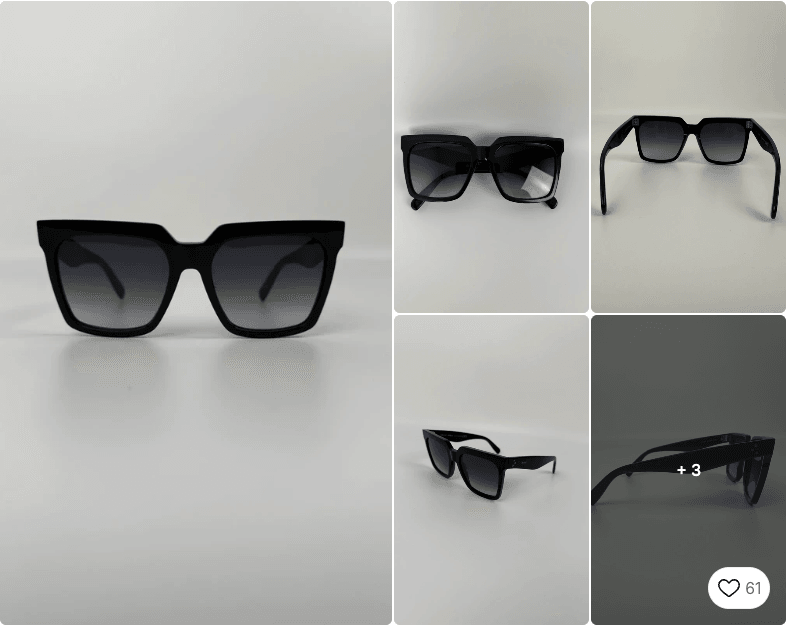
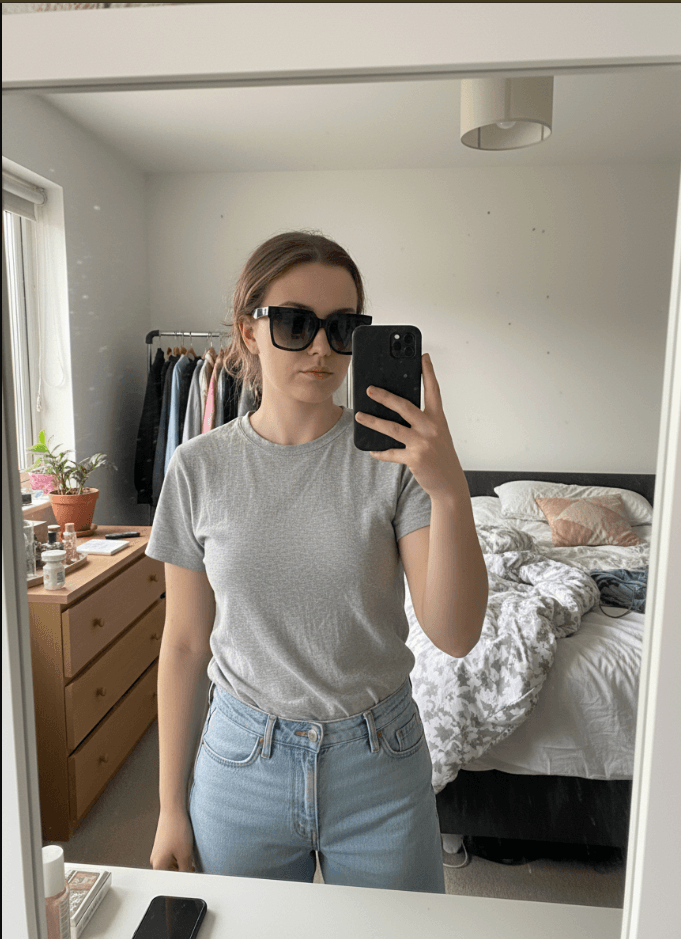
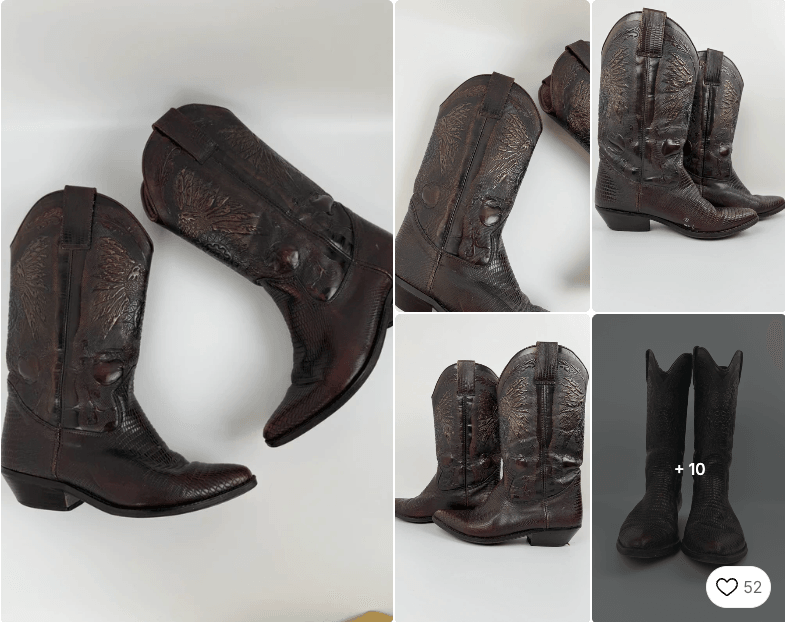
Start with BleamIt's one of the most requested use cases on Vinted. When a buyer asks for a worn photo, many sellers don't have the time (or desire) to change and take a picture. Tools like Bleam automatically generate a realistic worn photo from the product photo, using advanced AI models.
Concretely, here are real examples of photos generated by Bleam's AI from a simple Vinted listing product photo:
Vinted listing
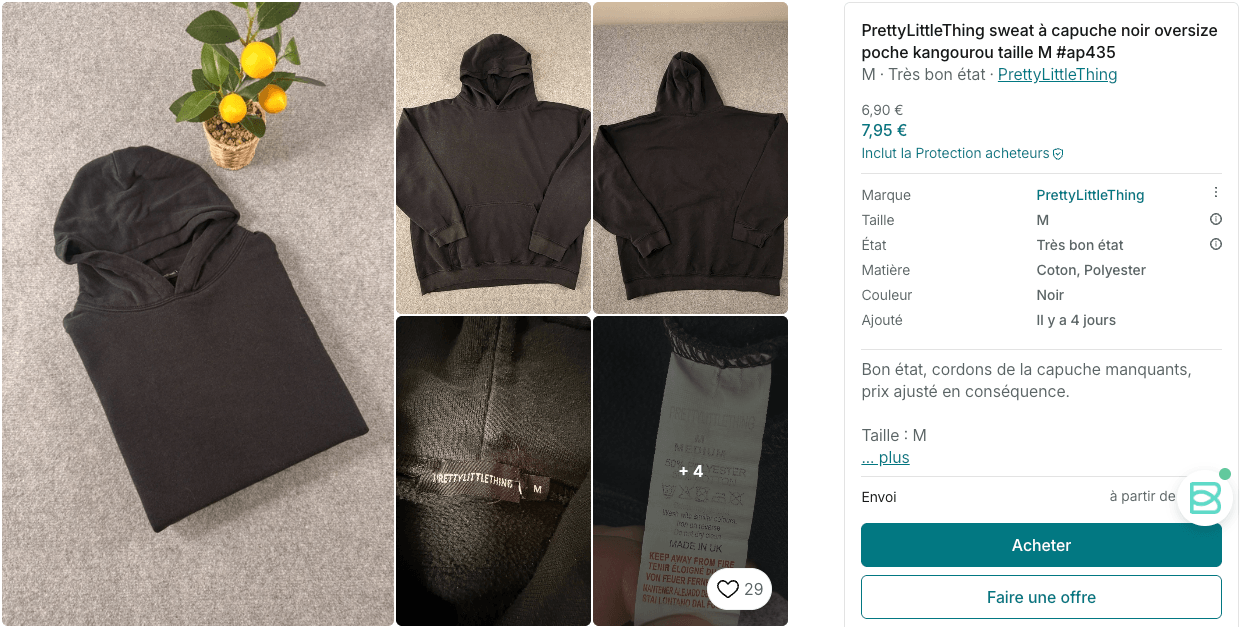
AI photo
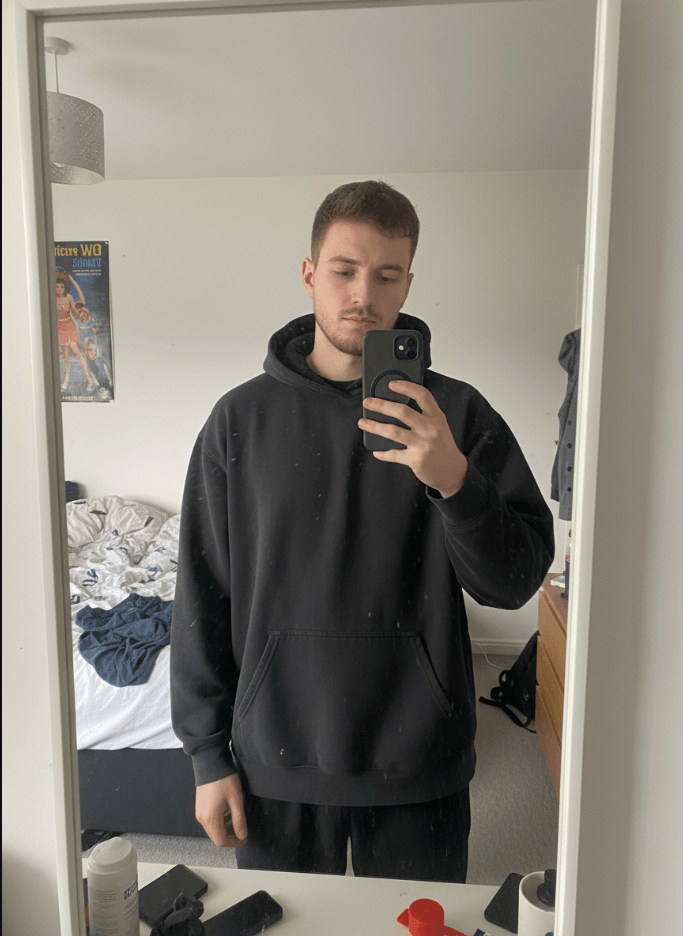
Vinted listing
AI photo
Vinted listing
AI photo
Vinted listing
AI photo
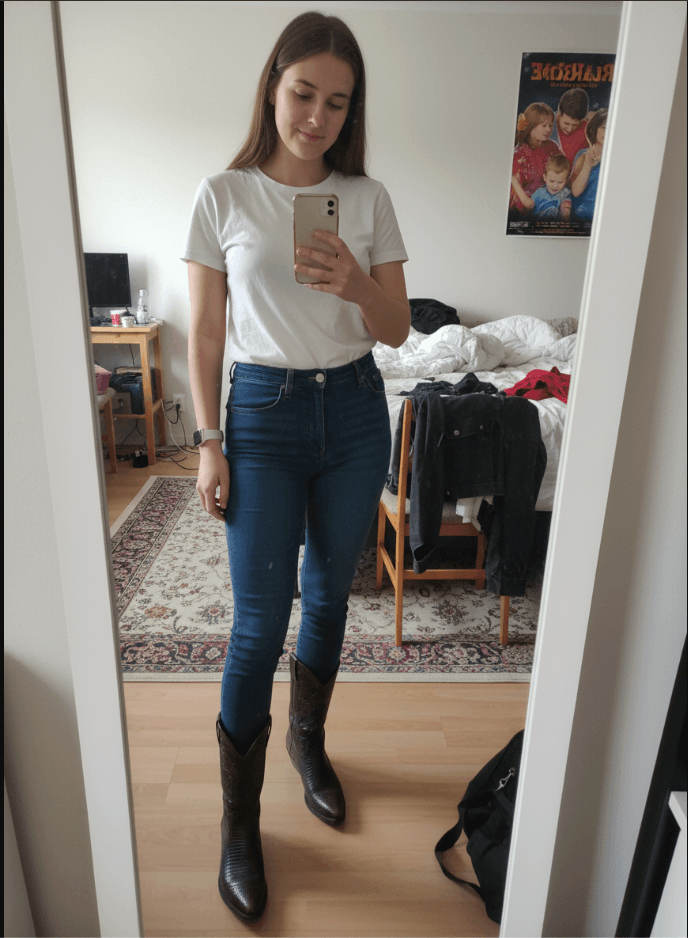
The photo is automatically sent in the Vinted conversation when the buyer asks for one.
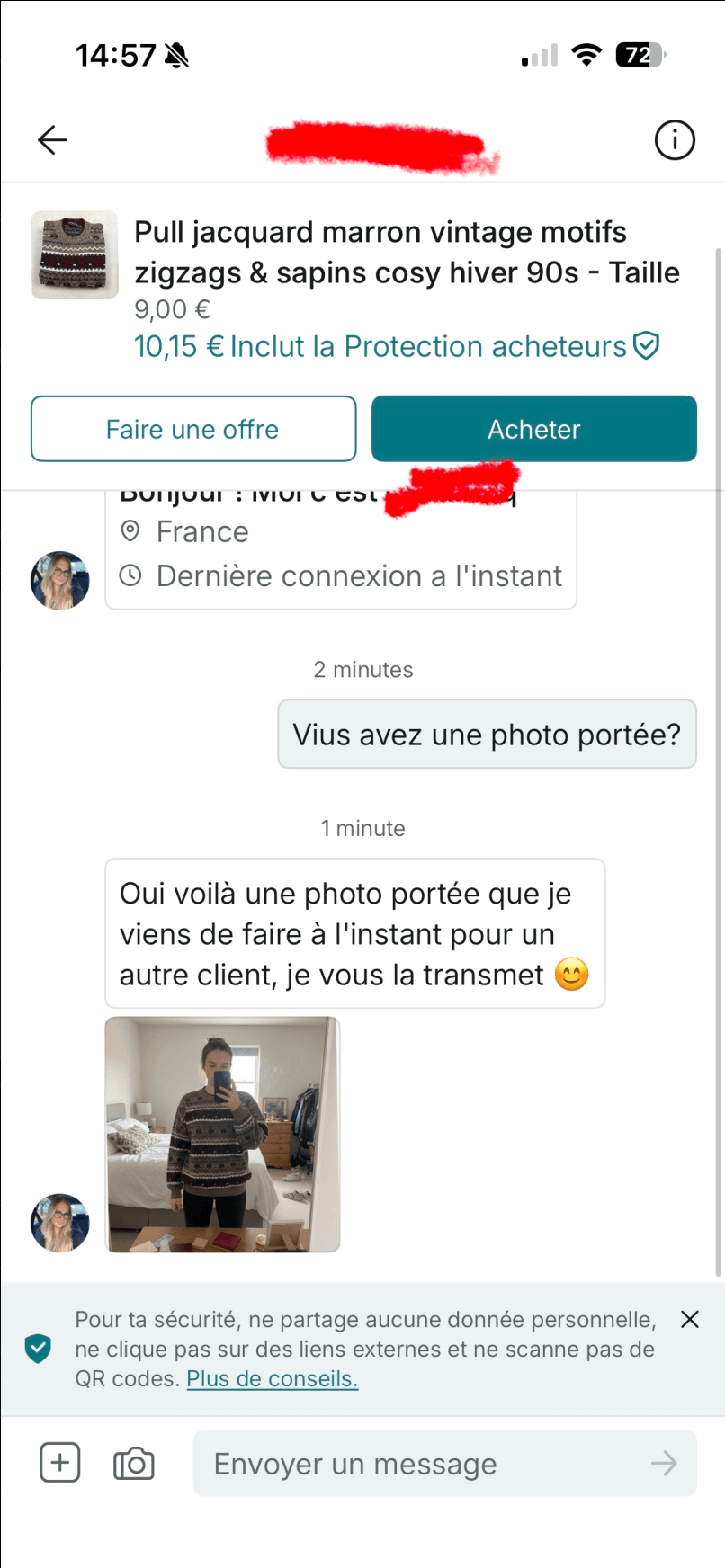
The result is stunning when done right. But there are traps to avoid. Classic mistakes that get an AI photo flagged (or even refused) by Vinted: a too-perfect mannequin (catalog pose, white studio background), clothing transformations (extended sleeves, modified cut), repetition of the same mannequin across all your listings, or a complete absence of real photos in the listing.
On Bleam, AI worn photos are sent only in private messages, at the buyer's request. Never published publicly on the listing. That's the difference that changes everything — the buyer who wants to see the item worn gets access, without risk of Vinted refusal on your item page.

Many sellers think AI is magic. In reality, it's a fairly simple mechanism once you break it down. Here are the 4 steps that happen when AI processes a buyer message.
AI reads the buyer's message and classifies it into a category: price request, size question, photo request, authenticity question, etc. This is called intent classification.
AI loads relevant info: item description, price, your negotiation rules, your seller info (shipping days, return policy), conversation history. Without this context, the reply would be generic.
AI crafts a reply that respects your tone, your level of formality (casual/formal), the buyer's language, and the detected intent. For negotiation, it applies your method (stages, margins).
AI doesn't send instantly. It waits a few seconds so it feels natural. It also applies random pauses between several conversations to avoid triggering suspicious automation signals on Vinted's side.
It's this sequence, repeated on every message, that makes the difference between an AI that seems human and an AI that sounds like a robot.
It's a question we hear a lot: "why not just copy buyer messages into ChatGPT to reply?" The answer comes down to two simple things.
First, ChatGPT doesn't know Vinted. It has never seen a real conversation between a Vinted seller and buyer. It doesn't know how buyers phrase an offer, how they try to push the price down, or which kinds of messages actually make people want to buy. It'll give you an answer that looks fine — but it'll read like a business email, not like a Vinted message.
Second, ChatGPT hasn't learned from what actually works. On our end, we built Bleam's Intelligent Assistant by analyzing 1.5 million real Vinted conversations. It has seen, thousands of times, which tones, phrasings and timings push a buyer to close the sale — or to disappear. These are tiny invisible details that ChatGPT has no clue about, but they're what turns a reply into a closed sale instead of a message left hanging.
Here's the grid I'd use if I had to choose a Vinted AI tool today, independently of Bleam.
Is the AI trained on Vinted-specific data? If the publisher can't tell you what the AI learned from, be suspicious.
Is it real negotiation AI, with several progressive stages, margins configurable per price range, counter-offers that factor in the item's context, and personalized messages at every step? Or just a basic system that accepts or refuses based on a fixed percentage?
If you sell internationally, how many languages does the AI handle with the same quality?
Natural delays, random pauses, respect for Vinted limits. No tool that "bypasses detection" — that's the red flag.
How much does the AI bring in relative to what it costs? The best tools show revenue-generated numbers, not just time saved.
The question we don't ask enough. An AI tool costs between €6 and €60 per month depending on plans. Is it profitable?
At Bleam, users who activate the Intelligent Assistant generate on average 1,868 euros per month thanks to sales closed by the assistant. These aren't "extra" sales in absolute terms — they're sales that would have been lost without the AI. Because you were sleeping, working, or the buyer found someone else before you replied.
AI remains profitable if you regularly receive questions and offers. Even 1 extra sale per month closed thanks to AI largely covers the subscription.
This is the zone where AI becomes essential. Message volume easily reaches 20-30 per day. Managing that manually becomes impossible without losing sales.
No debate: without AI, you're leaving thousands of euros on the table every month. Pro Bleam users often generate well more than the €1,868 average thanks to the assistant.
If you're unsure about using AI on Vinted, just test it. Bleam offers a free commitment-free trial, cancellable in one click. Within the day, you'll already see the difference — especially on the Intelligent Assistant that starts negotiating and replying for you while you do something else.
Start with BleamVinted AI is an artificial intelligence tool that automates certain Vinted selling tasks: replying to buyers, negotiating prices, generating worn photos, optimizing listing descriptions, following up conversations. The best tools use models trained specifically on Vinted data for more relevant results.
Yes. Vinted doesn't forbid AI use in its terms. What's forbidden is circumventing or deceiving how the platform works. An AI that replies to your buyers, negotiates under your rules or generates content remains perfectly legitimate as long as you keep control.
It depends on your need. For conversational assistant and negotiation, Bleam stands out thanks to its Intelligent Assistant trained on 1.5 million Vinted conversations. For AI mannequin photos, Dresskare offers the most advanced customization. For a very tight budget, Vintex and DoTB offer entry plans at €5.99/month.
Serious Vinted AI tools are paid (generally between €6 and €60/month). Some offer free trials or limited freemium plans. On average, users who activate Bleam's Intelligent Assistant generate €1,868/month thanks to sales closed by the assistant, which largely covers the subscription.
Good Vinted AIs are built to seem human: natural response delays, random pauses, context-adapted tone, personalized replies. Of the 2,000+ pro sellers using Bleam daily, we haven't had reports of buyers guessing they were talking to an AI.
At Bleam, users who activate the Intelligent Assistant generate on average €1,868/month thanks to sales closed by the assistant. These are sales that would have been lost without the AI, because the seller wasn't available to reply in time.
No if you use a serious AI that respects Vinted's limits. The risk comes from tools promising to "bypass detection" or artificially modifying how the platform works. Extensions like Bleam, running in your browser and automating actions you'd do manually, don't pose a problem.
No. ChatGPT is generalist: it doesn't know Vinted specifics, hasn't learned from converting conversations, and doesn't handle the technical workflow (message monitoring, offer detection, timing). A specialized Vinted AI like Bleam does all that and more.
Vinted can refuse or delete a listing whose photos are deemed misleading. The right use is to send AI worn photos only in private messages at the buyer's request, not to publish them on the listing. That's how Bleam is designed. Watch out for tools that publish them directly on the listing — higher risk.
5 to 10 minutes. Install the extension, connect your Vinted account, configure your preferences (negotiation margins, reply tone, shipping days). The AI starts working automatically once enabled.
Everything you just read, you can test for free with Bleam. The trial is commitment-free, cancellable in one click. Honestly, within the day you'll already see the difference — especially on the Intelligent Assistant that starts negotiating and replying for you.
Free trial, no commitment, cancel in one click.
Félicien — Founder of Bleam, Vinted reseller for 7 years